On the path to more sustainable product design (part one)
Material Choices
“Material Choices” is the first part of an upcoming two-part series.
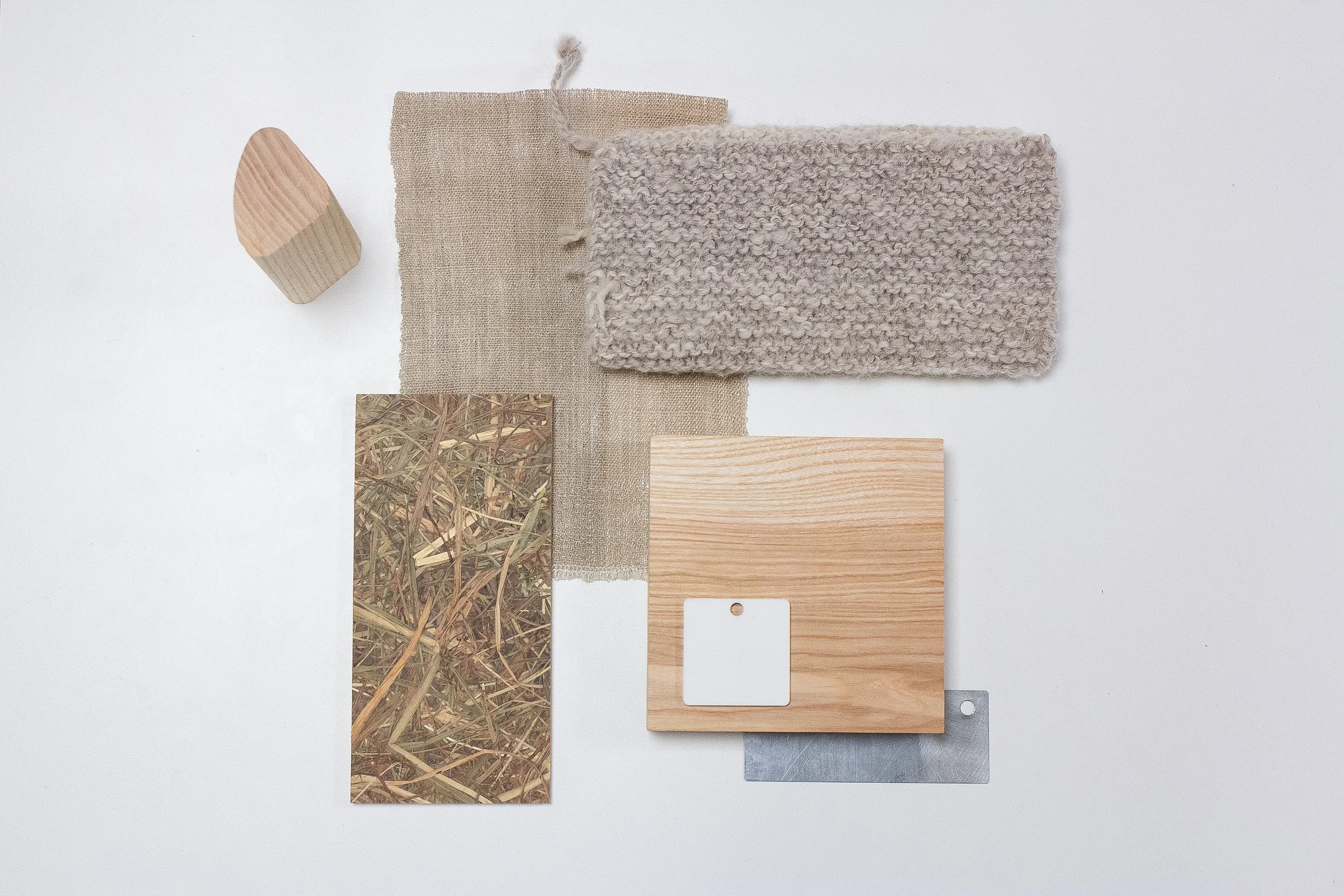
The linear economy, defined by the “take-make-waste” model, has proven to be a highly dysfunctional system at both a social and environmental level. Again and again, things are not built to last.

From a linear to a circular economy. Based on Circular Flanders.
Instead, they often are thrown away after one (short) usage - even the most meticulously designed ones. Alas, designers have been, and continue to be, perpetrators of the linear economy and its detrimental consequences.
Luckily, as a radical transformation of how we produce, consume and reuse goods gets increasingly urgent, designers can play an integral part in facilitating such systemic change.
But how to balance the quality of a product while minimising its impact on the planet?
It is challenging to create something that looks good, works well, lasts a lifetime, will not turn into waste and is beneficial for the environment and society. In product design, that often comes down to better material choices - as material efficiency can reduce raw material extraction, biodiversity loss, and CO2 emissions. Sustainable materials have become a hot topic and an industry in continuous development - think of biomaterials, for instance. And, as designers, we have a greater responsibility.
To help guide more sustainable design choices, in this article, we share some examples of categories of “better” materials that could inform your next product.
Note: More is to be said and done. We are only scratching the surface here. The goal is to bring the subject to light and ensure we, as designers, pay attention to these choices early in the design process.
“Better” Materials
Recyclable and recycled materials

Smile Plastics - 100% recycled and 100% recyclable plastic. From FROLIC studio Award-winning materials.
Recyclable materials - such as glass, paper and aluminium - can be reprocessed into the same (recycled) material and used again (and again). The recycling process, however, decreases the original quality of many materials and, due to faulty recycling systems, also their quantity.
Despite the benefits recycling brings, it keeps our economy dangerously dependent on the extraction of non-renewable materials. Moreover, products are not kept in circulation as long as possible at their highest and best use.
Recyclable and recycled materials are only one part of a more extensive system to achieve and maintain better design choices in a circular economy.
-
Recycled plastic
Recycling slows plastic's arrival at the trash yard. However, plastic’s quality degrades each time it is recycled. During the recycling process, plastic is melted, and its polymer chain partially breaks down, reducing its tensile strength and viscosity. Hence, there are only so many cycles the same plastic can go through before becoming a non-recyclable material.
Another issue is that, during the recycling process, different types of plastics are often mixed, resulting in lousy quality materials. Furthermore, inaccurate waste collection and certain dyes or additives can make recycling extremely energy-intensive or even impossible. Thus, it is also important to consider future recyclability when choosing plastic as a material for a product.
Stainless steel
Depending on the final product, stainless steel can make for a suitable material option. It is toxin-free (hence why it is so ideal for cutlery and surgical implants) and can last for decades.
Moreover, as opposed to plastic, it does not degrade during the recycling process, which means it can be recycled endlessly.
-
Real-world materials
Smile Plastics. Recycled Plastic Materials Design
Ecopixel. High quality stereo bluetooth speaker made of recycled plastic
Recommended reads
Plastics and the circular economy
Recycling and the circular economy: what's the difference?
A single sheet of steel to form furniture "that can last a generation"
Biomaterials
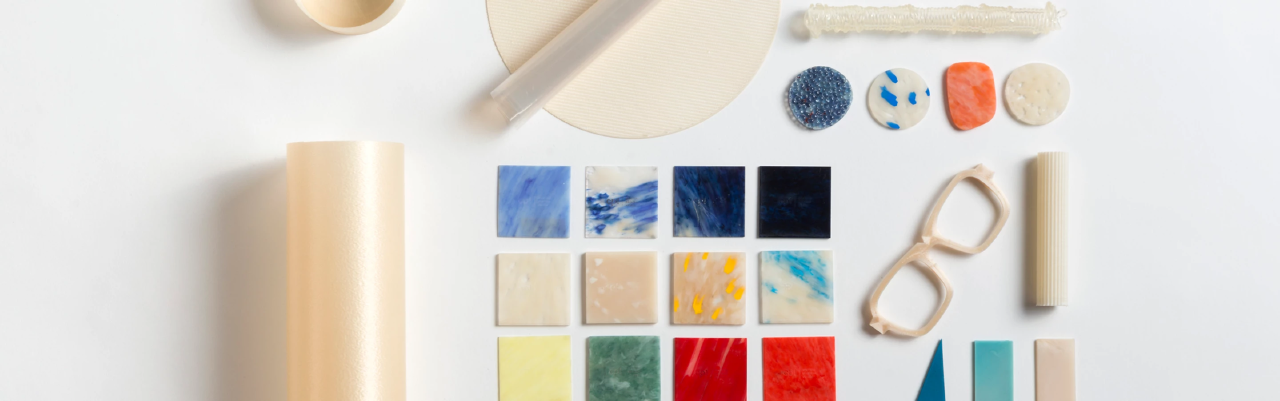
Nuatan - Made of 100% plant-based biopolymers PLA and PHB from plant-based resources such as corn starch and potato starch. Biodegradable in an industrial composter.
Biobased materials, or biomaterials, are made from natural renewable feedstocks. Think of wood, hemp, paper, cardboard, mycelium and some textile materials such as wool. They stand out against those commonly defined as synthetic materials, which are mainly manufactured from nonrenewable feedstocks (i.e., fossil fuels and minerals).
Moreover, the rise of sustainability in the industry agenda and concerns about greenhouse gas emissions have kickstarted the development of a whole new set of biomaterials, made, for instance, from seaweed, cactus, or all kinds of organic waste.
A series of synthetic biobased materials, such as polymers, fibres and lubricants, are also emerging. Think of bioplastics such as PLA and bio-PET, obtained from starchy foods like corn, sugar cane or sugar beets.
Note: Biobased materials save nonrenewable energy and can substitute nonrenewable fossil fuel- and mineral-based feedstocks. However, they may come at the cost of additional land use and related environmental impacts.
-
Bioplastics
Bioplastics may be a better alternative to regular plastics. However, we must consider some factors for them to be labelled as sustainable materials.
Where are they grown? How much land do they occupy? How much water is needed? What about the energy demand for growth, conversion, and production? Is the production process dependent upon fossil fuels?
It is also good to remember that not all bioplastics are compostable or biodegradable, so they can still end up in a landfill like regular plastic.
Seaweed-based biomaterials
Seaweeds (marine plants and algae) naturally grow in water bodies. However, climate change, deforestation, water pollution and warming oceans cause prominent seaweed blooms, which damage coastal ecosystems, communities and livelihoods. Seaweeds are also grown on seaweed farms, protected and controlled areas which instead favour biodiversity and protect the coasts.
Due to their abundance, high productivity, no-land use, and ability to reduce greenhouse gas emissions, whether farmed or collected from blooms, seaweed-based biomaterials are now increasingly promising and employed for many applications. Think of biofilm materials for packaging purposes, fabrication of bioplastics and biocomposites, and biomaterials for 3D printing.
-
Real-world materials
Nuatan. A new generation of bioplastics
Sqim. Defining entirely novel materials’ categories
FlexSea. A sustainable seaweed-derived biomaterial
Fine Mycelium™. A patented process to grow superior materials
Totomoxtle. Biomaterial regenerating Mexican traditional agricultural practices
Recommended reads
Biodegradable materials

Exploring cardboard as a biodegradable product material - From FROLIC studio upcoming project.
While biobased refers to the origin of a product’s materials, biodegradable refers to their end of life. Microorganisms break down biodegradable materials when provided with specific suitable conditions (e.g., temperature, oxygen, light, water).
Diverse materials take different amounts of time to be degraded. For example, if left in the environment, it would take vegetables 5-10 days to be degraded. Instead, a styrofoam cup or a plastic bag may need 500 years, or, at worst, indefinitely, to be fully broken down.
Does this mean that any material could be biodegradable? In theory, yes.
However, standards have been developed to properly assess material biodegradability to minimise confusion and avoid exploitation of the term and its implications. For instance, synthetic polymers are considered “resistant to biodegradation” due to their prolonged degradation process.
Note: As you read above, biobased and biodegradable are not synonymous. Biobased materials are often biodegradable, but this is only sometimes the case.
-
Cork
Cork trees grow naturally in the Mediterranean (Iberian Peninsula and Northwest Africa). After the trees are 20 years old, cork can be harvested every nine years for about 150 years. Additionally, the trees are unharmed from the debarking.
Structurally, cork is a low-density, polymeric closed-cell foam. It contains suberin, fatty acid, and waxes, making it impervious to air, water and alcohol. Its high elasticity and low permeability make it an excellent thermal and sound insulator.
Cork is considered a low-impact material as its harvesting does not require cutting down cork plants. However, cork can only take on basic shapes and is unsuitable for replacing plastic in injection moulded products. Still, it is a versatile, durable, biodegradable and recyclable material, making it a fantastic sustainable alternative to reduce plastic consumption.
Bamboo
Bamboo is biodegradable and can be grown fast as it regenerates from the root, so it does not require re-cultivation. Moreover, its farming does not call for pesticides, making it a top pick as a sustainable material in its raw form.
Unfortunately, its profitability has often encouraged farmers to replace natural forests with bamboo monoculture plantations, harming biodiversity and weakening the entire local ecosystem. Furthermore, bamboo planks or block production requires additional compression as bamboo is naturally hollow.
Note: Be aware that viscose - the textile form of bamboo - is made with harsh chemicals and requires a lot of water and energy to be produced, so it is not always that good.
-
Compostable materials
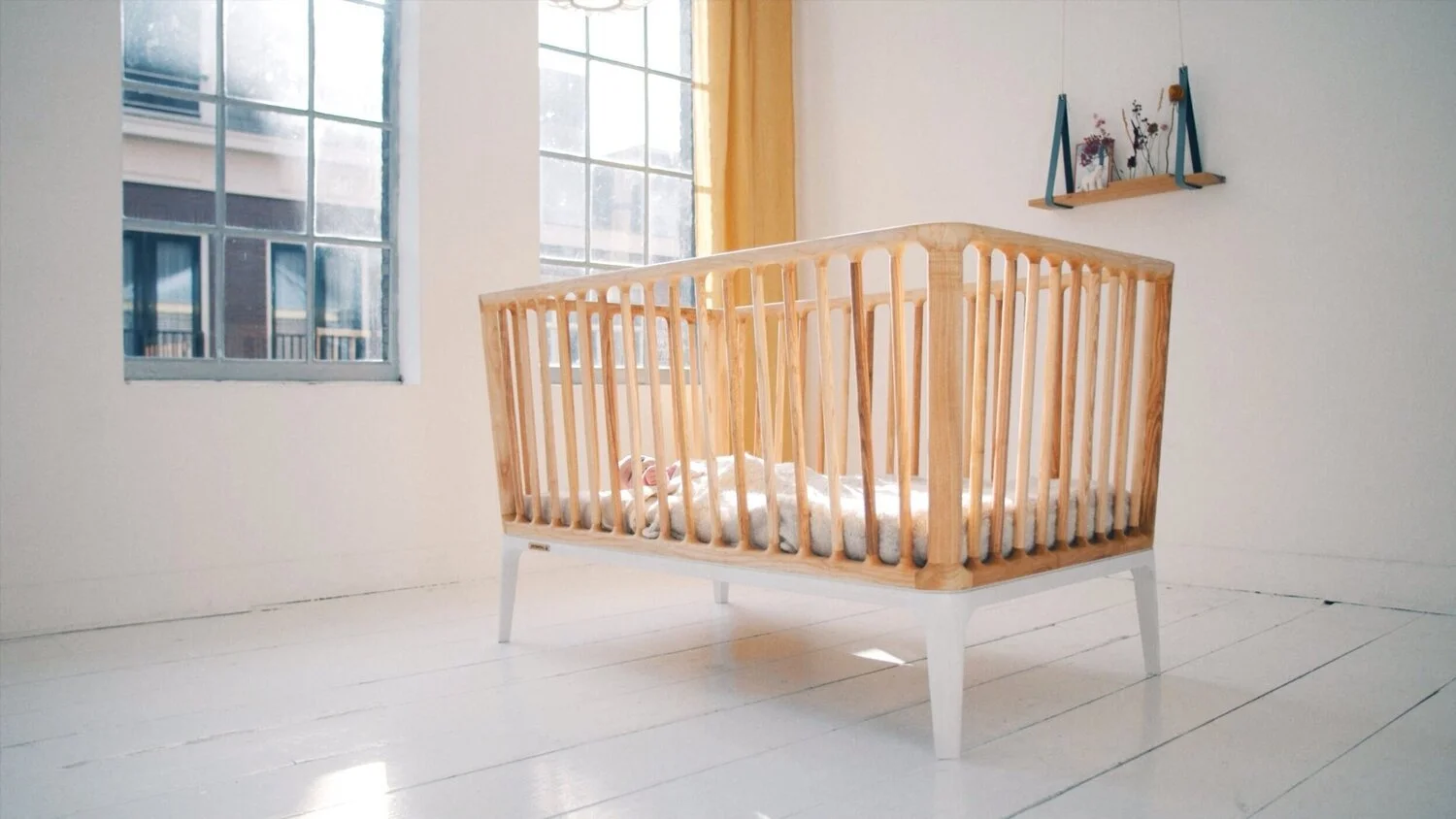
Vattenfall fossil-free baby crib designed by FROLIC studio.
All compostable products are biodegradable, but not all biodegradable products are compostable.
Compostable materials fully decompose into a non-toxic natural substance that is not harmful to the environment and can often be used to improve soil health.
Some materials - like fruit and vegetable peels - can decompose in a home composter, but not all compostable materials are suitable. Some might require higher levels of heat, water, oxygen and microorganisms and, therefore, need to be broken down in an appropriate industrial environment - like most commercial compostable packaging.
Note: As you read above, all compostable items are biodegradable, but not all biodegradable products are compostable. The key difference is that broken-down compostable materials do not introduce any environmental toxicity.
-
Wood
Wood is bio-based, biodegradable and compostable (depending on its finish). As trees grow, they sequester carbon. Despite some of it being emitted back into the atmosphere during wood processing, wood production is less carbon-intensive than many of its alternatives (e.g., concrete).
Wood is also stylish and timeless. However, it is a less reliable and predictable material, compared to plastic or metal, for many applications requiring small tolerances.
Recently, there has been significant progress in using wood in the construction sector, successfully substituting other carbon-hungry materials such as concrete. In product design, it is often employed for furniture-making or in combination with other more substantial materials.
-
Wrapping it up
Prioritising sustainability as early as possible in the design process will result in the most significant reduction of the impact of the end product. Hence, it is especially at this step that designers have the opportunity to make positive change happen.
Materials are one part of a more extensive system to achieve and maintain greater overall design choices in a circular economy. Thus, during the initial product design phases, moving away from a linear “take-make-waste” economic model in favour of circular development often means making “better” material choices. As a product design studio, it is part of our job to research, employ and advocate for materials that lead us towards more sustainable products and footprints.
Ensuring that the environmental impact of what we create is always considered from the very beginning is a challenging ambition - and even more when functionality and aesthetics are also a top priority. When looking for the right “better” material, there might always be a more suitable alternative that we did not know about, consequences and trade-offs we did not consider or adverse effects we could not avoid. An extremely high count of aspects and angles need to be taken into account.
The silver lining is that great companies and people are doing excellent groundwork in researching, innovating, developing and evaluating materials. Thus, ultimately helping us pursue our commitment on the path towards more sustainable product design.
Interested in reading more? Part Two is coming soon!
Explore more articles